What is an Accessible Shower? Choosing the Right System For You
Choosing the Right System for Your Adapted Bathroom
Summary
Accessible showers are designed to improve safety, comfort, and independence. The two main types are electric showers [internal link here] and thermostatic mixer showers [internal link here], each suited to different homes, users, and levels of accessibility.What is an Accessible Shower?
An accessible shower is a shower designed to improve safety, ease of use, and independence. This often includes features such as level access, stable temperature control, and easy-to-use controls for both independent and assisted use.Why Your Shower Choice Matters
In an adapted bathroom, the shower isn’t just another feature — it’s a daily point of independence. The right shower will:- reduce the risk of burns and slips
- support both seated and assisted use
- make everyday routines simpler and more comfortable
Electric vs Thermostatic Showers: What’s the Difference?
Electric Showers
Electric showers heat water on demand using an internal heating element. They connect directly to the cold water supply and do not rely on a boiler or hot water system.Thermostatic Mixer Showers
Thermostatic showers use both hot and cold water supplies and automatically maintain a consistent temperature using a thermostatic valve.Which Is Right for You?
✔ Electric showers are best if you:
- need a simple, flexible installation
- don’t have a reliable hot water system
- want a cost-effective solution
- have a single primary user
✔ Thermostatic showers are best if you:
- prioritise safety and temperature stability
- have multiple users
- require assisted showering
- are designing a long-term accessible bathroom
Real-World Examples
- Older adult ageing in place → Thermostatic shower for consistent, safe temperature control
- Rental property or retrofit → Electric shower for simple installation
- Wheelchair user or assisted environment → Thermostatic shower with accessible layout and seating
- Single user household → Electric shower for straightforward daily use
Electric Showers
How They Work
Water is heated instantly as it flows through the unit, meaning you always have hot water without relying on stored supply.Benefits
Reliable hot water on demand No waiting for tanks to refill or heat up. Safe and controlled temperature Built-in controls help prevent overheating and reduce scalding risk. Simple installation Requires only a cold water supply and electrical connection. Energy efficient Only heats the water you use, reducing waste. → Explore electric showers designed for accessible bathroomsConsiderations
Lower water pressure Performance depends on your mains supply, which can limit flow. More functional design Fewer aesthetic options compared to mixer systems. Less suited to assisted use Electric showers may not provide the flow rate or stability needed in higher-dependency environments.Thermostatic Mixer Showers
How They Work
They blend hot and cold water to maintain a consistent temperature, even if water usage changes elsewhere in the home.Benefits
Consistent, safe temperature Prevents sudden temperature changes, which is critical for safety. Ideal for assisted showering Particularly important where users cannot quickly react to temperature changes. Stronger water flow Typically delivers a more powerful and comfortable shower. Greater design flexibility Available in a wide range of styles and configurations. UK safety standards Often specified with TMV (Thermostatic Mixing Valve) compliance to meet safety expectations in UK accessible bathrooms. → Explore thermostatic showers for safe, consistent daily useConsiderations
Higher upfront cost More complex systems and installation. System compatibility required Your boiler and plumbing must support the setup.Accessibility Considerations (Beyond the Shower Type)
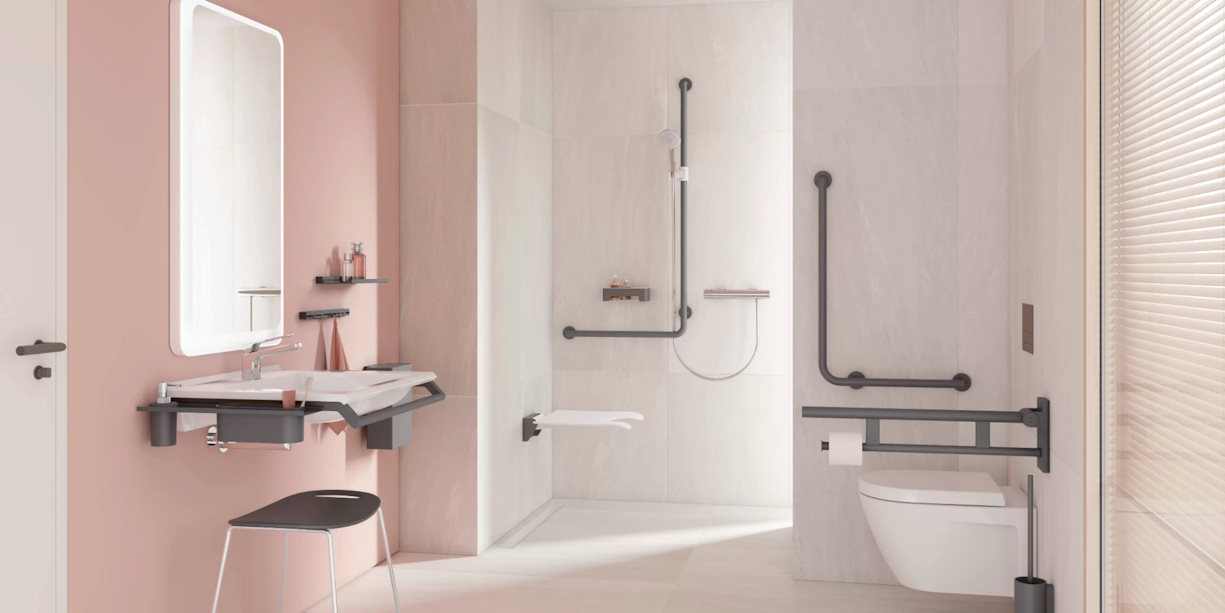
Choosing the right system is only part of the solution. A truly accessible shower considers the full environment.Controls
- easy to reach
- simple to operate
- suitable for reduced dexterity
Shower Heads
- adjustable height
- handheld options
- flexible hose length
Seating
- allows safe, seated showering
- reduces fatigue
- supports assisted use
Layout
- level access (no step)
- sufficient space for movement
- suitable for wheelchair users and carers
Electric vs Thermostatic: Quick Comparison
| Feature | Electric Shower | Thermostatic Shower |
| Water source | Cold only | Hot + cold |
| Installation | Simple | More complex |
| Temperature stability | Good | Excellent |
| Pressure | Moderate | Typically stronger |
| Best for | Simple setups | Long-term accessible use |
Quick Decision Summary
- Electric shower → best for simple installs and flexibility
- Thermostatic shower → best for safety, performance, and long-term use